
Middle Eastern Aviation and Etihad Airways
Air travel hasn’t been more interesting and revolutionising, than it’s been in the last decade. Thanks to its favourable geographic position and oil reserves, the Middle East has emerged as the new hub for Middle Eastern carriers connecting Europe with Asia and the US.
The dynamics of the aviation landscape has seen a sea change globally, much to the chagrin of legacy operators in Europe and the US. Carriers from the Middle East are challenging traditional European and American players, in their own backyard. Etihad Airways is one of the big three, based out of Abu Dhabi, UAE, and is the second largest (first being Emirates) flag carrier of the Arab Emirates.
Who are they?
Etihad Airways commenced operations in 2003. In 2014, the carrier embarked on a rebranding strategy, to reposition itself as an agile airline, willing to align itself with the changing commercial dynamics of Gulf aviation.
Amidst stiff competition from its friendly rival, Dubai based Emirates, Etihad Airways’ rebranding needed to capture the essence of a serious contender challenging the existing norms of airline hospitality. Further, the brand needed to reflect the understated flamboyance so unique to Abu Dhabi on the airline.
The Rebranding Design Brief
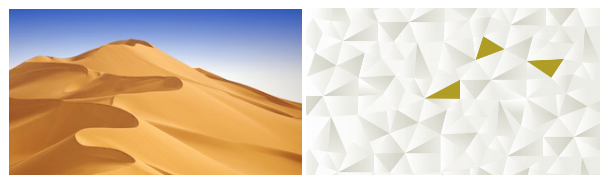
Landor Associates, a reputed brand consulting firm was tasked with the rebranding strategy. Interestingly, Landor didn’t look to aviation for inspiration but to something more earthen and sublime – the wind swept sand dunes of Abu Dhabi. The wind swept patterns on the golden desert sand cocooning the Moresque architecture of Abu Dhabi served as the canvas for Landor’s design. These iconic visuals of Abu Dhabi are interpreted as copper, silver, cream and brown tessellated polygons.
The Old and New
This is a clear departure from Etihad’s old branding and the team at Landor believe such a transformation was absolutely needful for a successful rebrand strategy. The whole design concept is interestingly titled Remarkable and the chosen colours reflect the appearance of sand dunes in different lighting conditions.
In the airline, these coloured polygons exude an aura of exclusivity and premiumness while also imbibing the airline livery with a unique identity. The design team at Landor add, “Etihad is a hospitality brand that provides experiences so magical, they have to be remarked on. No detail is too small, no idea too big. The concept of Remarkable infuses the brand, creating an airline with legendary stature.”
The new livery will adorn Etihad’s fleet and the makeover operation is expected to be completed by 2017. These prismatic shapes are a safe bet in design parlance and design experts believe they have a longer “shelf life” in terms of visual appeal.
To that end, Landor have succeeded in sticking to Etihad Airways’ rebrand strategy. Speaking at the livery unveil to Jonny Clark of thedesignair.net in Hamburg, Peter Knapp, Global Creative Officer of Landor Associates, had this to say: “…we used the ambient geometry present in the architecture and culture of the emirate and reinterpreted it with a sense of Arabian modernism which has become synonymous with Etihad and Abu Dhabi itself.”
Design Theme and Interpretation
Etihad Airways’ fleet include the super-jumbo long haul A380s, long haul jumbo 787 Dreamliners and a slew of mid range 330s and 777s. The A380 consist of an industry first Residence suite, to cater to VVIP elite guests (Etihad’s term for passengers), which is essentially based around the concept of a studio apartment in an aircraft. This is followed by First, Business and Economy class, all given that remarkable Etihad touch.
The rebrand design needed to reflect these categories by having their own interpretation of the Remarkable theme infused in them.
This is what Landor have to say:
“Simply smarter economy class—Reinvents small moments that other airlines overlook, to bring a sense of surprise, spontaneity, and fun to air travel.
Intelligent business—Designed for the new global tribe that challenges traditional notions of business class.
First class—Creates a luxury travel experience so deeply personal, it’s like being transported to your own private universe.
VVIP travel—A unique vision of VIP travel with service so exclusive only a select few will fully experience it.”
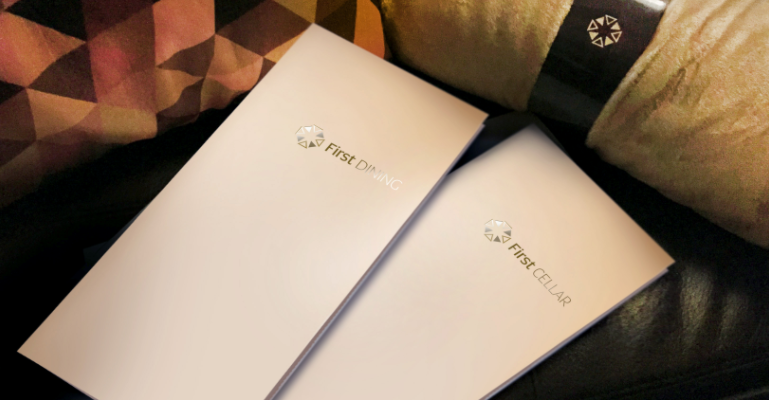
The rebranded theme is reflected from the cosy and vivid prismatic pillow to the exuberant Etihad lounges across continents. The colour cues of copper, brown, cream and silver are also represented in the Residence and other classes subtly, to complete the Etihad ambience.
Trivia: An internet search reveals that Residence fliers love the polygon Etihad pillow; I cannot, but agree!
Growth Stats
Now, onto some numbers: According to travelweekly, a UK based travel website, Etihad’s annual passenger numbers grew by 23% in 2014. Given the fact that this percentage also includes Etihad’s code sharing partner airlines, it’s still a decent number, albeit 2014 being a year of slow passenger growth, globally.
Etihad’s growth trajectory continues on in 2015 as well with a 17% jump from previous year’s numbers (Times of Malta). To put in perspective, that’s about 23.3 million passengers, of which, Etihad claim 75% of that number, while the rest are taken up by their codeshare partners. This spike in growth is evidenced from 2012 onwards, leading us to believe that the rebranding strategy indeed worked, transforming Etihad as a carrier bringing Abu Dhabi to the skies.
Six brand case studies that proved the value of storytelling
Storytelling in marketing terms isn’t just about producing an advert with a narrative, it’s about telling the story of the ‘brand’ across multiple channels and using various tools and methods.
Storytelling techniques can give credibility and personality to brands both large and small.
You can build more meaningful relationships with customers by either highlighting the people behind the brand, creating a distinct tone of voice across all channels or by using the history of the brand to broaden the richness and authenticity of your story.
Join us at our Festival of Marketing, a two-day celebration of the modern marketing industry held in November, where we have an entire stage devoted to Brand & Creative.
Here speakers will help you find the right story for your brand and teach you to how to grow your business while maintaining culture and brand authenticity.
In the meantime, let’s take a look at some other useful case studies.
Visa
Despite being one of the most used credit cards in the world, Visa had identified an emotional distance between its brand and its customers.
Industry research suggested that brands have people’s attention for just 6.5 seconds, so Visa created the GoInSix campaign where the brand would generate interactive content designed to motivate people to dine, shop and travel, using either six-second videos, six-image vignettes or six words.

The campaign ran across all of its social channels and Visa urged influencers to upload their own GoInSix stories.
Visa’s Facebook engagement score ranking went from seventh to first in ‘finance’ and climbed to second in all lifestyle brands. The campaign delivered 284m earned impressions, five times more than a previous Visa campaign, which had 18 times more media spend.
WaterAid
‘The Big Dig’ by WaterAid was an integrated campaign which brought fundraising, communications and country programme teams together to raise over £2.5m for WaterAid’s work in Malawi through digital storytelling.
Mobile blogging direct from Malawi meant supporters and donators could see their support in action and meet the people they were supporting.
It was a first for the sector, using social platforms and mobile tools so that supporters could meet people whose children were dying from lack of clean water, come together with them to change it and watch as a truck drilled the borehole bringing the village clean water.
The Big Dig was WaterAid’s most successful fundraising and awareness campaign, raising £2.6m (including government matching) against a target of £1.2m and bringing clean, safe water and sanitation to 134,000 people in Malawi.
Digital channels including the Big Dig blog raised £75,000 directly, but also drove engagement and reach to increase the overall result. 7% of new supporters signed up for email updates or left a comment.
ITV
ITV wanted to create a new multi-screen synchronised ad format that made the most of the growing audience using their smartphone and tablet to use play-along games.
While the percentage of the broadcast audience on these games is still small, it is proving to be a useful tool as it combines the storytelling potential of broadcast TV advertising with the intimacy of tablets and smartphones.

The new ad format was integrated into ITV’s play-along games so as to complement the broadcast advertising, reaching consumers on second screen devices with interactive messages synchronised with on-air spots.
The ad format was launched during The X Factor final last year, and it resulted in 252,865 impacts and 1,327,657 page views, with an average CTR of 8.75%.
Active engagement was 38% (the percentage of page views that were actively viewed by the user swiping rather than shown automatically after 10 seconds).
Microsoft
Microsoft needed to prove to an audience lured away from IE9 by Google Chrome, that its browser was just as exciting, fast and easy to use.
Microsoft teamed up with director Edgar Wright and illustrator Tommy Lee Edwards to create an animated story, The Random Adventures of Brandon Generator.

After each film, the viewer was able to contribute ideas, messages, prose and drawings through an interactive hub, all using the capabilities of IE9.
The crowdsourced, immersive story led to:
- 600,000 unique visitors to the Brandon Generator site
- 10,000 crowd-sourced entries to create subsequent chapters
- 308,342 organic YouTube views
- 12.2m media-driven YouTube views
- IE market share finished ahead of target (target: 51.8%, actual: 53.9%)
- 1.7m IE9 downloads
IKEA
In 2011 the IKEA catalogue had more competition from other print and online publications than ever. The catalogue needed reinvention, however it needed more than a digital-only solution.
Ikea created an augmented reality application to enable smart-phone users to unlock extended content. This enhanced the experience of reading the catalogue, thereby breathing new life into its pages and giving consumers a continuous brand experience.

The design, technology and storytelling overhaul turned the catalogue experience into an evolving innovation platform, which generated real time insight around consumer preference.
Globally, the app was the No.1 downloaded marketing app for a brand in 2012 and the catalogue received three times the attention of the 2011 catalogue.
The new print and app experience led to an increase in engagement with a six minute time spent in app vs. the average 3 min with just the catalogue. The 42 scannable pages saw a 35 % increase in scanning. The app was downloaded 6.2m times.
Manchester United
Manchester United has a massive global following, with more than 300m fans in Asia alone. Connecting with this fanbase is a key part of the club’s strategy.
It identified that social media platforms are one of the primary methods by which it engages and transacts with its global following, and can be used to create new revenue streams.

Man United launched an official Facebook page in 2010 and posts an average of ten times a day, often running competitions to capture data and using content to support sponsors’ requirements, as well as running polls and asking fans’ opinions. Its timeline also displays the history of the club.
In July 2013 the club launched a presence on both Twitter and Chinese site Sina Weibo.
On Twitter, it taps into its players’ individual followings, with Q&As as well as news, with an average of ten tweets a day. It also tweets lots of photos as well as sharing fixture updates and infographics. A similar approach is taken on Seina Weibo, with the majority of posts hitting over 100 shares within a few hours.
With over 34.5m Facebook ‘likes’, MUFC is one of the most popular brands on Facebook. Both Twitter and Sina Weibo accounts attracted over 700,000 followers within just over a month of launching, with the majority of Twitter posts averaging over 700 retweets. Its Google+ page also acquired more than 40,000 followers within less than a month.
 Rio Simpson